English
  한국어
한국어

I remember a hot summer afternoon a few years back when a call came in from a plant manager. A production line had tripped—again. The thermal breaker in their control panel had done its job, sort of. But the problem wasn‘t an actual overload. It was the ambient temperature inside the cabinet, which had climbed past 45°C. The bimetallic strip simply bent earlier than it should have. They lost four hours of production, and the real kicker? The electrician who showed up couldn’t find any actual fault in the circuit. That experience stuck with me because it highlighted something many engineers overlook: the protective device itself can become the weakest link when conditions aren‘t ideal. A Hydraulic Circuit Breaker doesn’t fix every problem in an industrial power system, but it solves one specific and often underestimated issue—temperature‑dependent tripping.
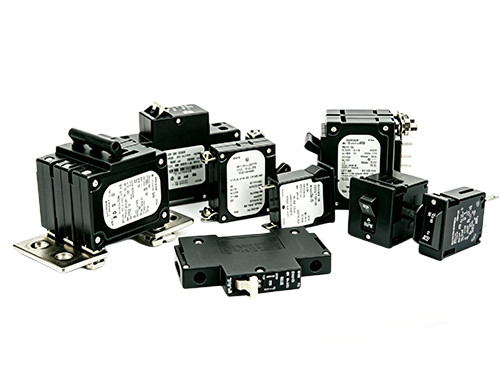
What‘s Actually at Stake: The Numbers Behind Electrical Incidents
Let’s start with the real-world context. According to NFPA estimates published in its 70E Standard for Electrical Safety in the Workplace, five to ten arc flash explosions occur every single day across the United States, totaling roughly 1,800 to 3,650 incidents annually. Each arc flash releases energy that can reach temperatures as high as 35,000°F. About 80% of electrical worker fatalities are caused by burns rather than electric shock. That means the protective device‘s ability to clear a fault quickly and reliably isn’t just about equipment protection—it‘s about people.
What doesn’t always make it into safety reports is how often protective devices themselves contribute to the problem. Thermal‑magnetic breakers, which remain the most widely used type in industrial settings, rely on a bimetallic strip that responds to heat. But that strip responds to ambient heat as well as fault‑induced heat. In a packed control panel on a 40°C factory floor, the trip point can shift significantly. That’s not speculation—it‘s a known limitation of the technology.
How a Thermal‑Magnetic Breaker Actually Works (and Where It Falls Short)
To understand the difference, you have to look inside each device.
A thermal‑magnetic circuit breaker uses two separate sensing mechanisms. The bimetallic strip handles overloads: as current flows through it, the strip heats up and bends, eventually triggering the trip mechanism. The time it takes depends on how much current is flowing—more current means faster heating and quicker tripping. That’s the inverse time delay characteristic you see on data sheets.
For short circuits, a separate electromagnet responds instantly, pulling the trip mechanism without any intentional delay.
This two‑mechanism design has been around for decades and works fine under controlled conditions. But the bimetallic strip doesn‘t know the difference between heat from the load current and heat from a hot control cabinet. If the ambient temperature rises, the strip reaches its trip temperature sooner—even if the load current is perfectly normal. Conversely, in cold environments, the same breaker may allow an overload to persist longer than intended because the strip takes longer to heat up.
That variability introduces uncertainty into arc flash calculations. NFPA 70E requires accurate clearing time data for hazard analysis. A breaker whose trip point shifts with temperature makes those calculations less reliable.
A Different Approach: The Solenoid‑Based Mechanism
Now consider a different design. A hydraulic magnetic circuit breaker operates on the solenoid principle. A solenoid coil is wound around a hermetically sealed tube that contains an iron core, a spring, and a damping fluid—typically silicone oil. The load current flows through the coil, generating a magnetic field proportional to the current.
During normal operation, the magnetic force is insufficient to overcome the spring tension, so the core stays in its rest position and the contacts remain closed.
When an overload occurs, the magnetic force starts pulling the core toward a pole piece. The damping fluid regulates the core‘s speed of travel, creating a controlled time delay that is inversely proportional to the current magnitude. If the overload is transient—say, a motor starting up—the core returns to its rest position once the current drops, and the breaker never trips. If the overload persists, the core reaches the pole piece, the magnetic circuit’s reluctance drops, the armature is attracted with sufficient force to collapse the latch mechanism, and the breaker opens.
For a short circuit, the magnetic flux is so intense that the armature is attracted instantly—without any core movement—providing instantaneous trip protection.
The key point: the trip mechanism depends on current, not temperature. The damping fluid‘s viscosity does change slightly with temperature, but manufacturers compensate for this effect so that the trip characteristic remains consistent across a wide operating range.
Temperature Stability: The Practical Difference
Let me put this in practical terms. A thermal‑magnetic breaker rated for 20A at 25°C may trip at 16A when the ambient temperature reaches 60°C. That‘s a 20% derating factor that you have to account for in your design—or risk nuisance trips that shut down production.
A hydraulic magnetic circuit breaker rated for 20A will hold 20A regardless of whether the cabinet is at -40°C or 85°C, as long as the current stays at or below the rated value. The trip point at overload—typically 125% to 130% of rated current—also remains stable across that same temperature range.
This matters more than you might think. Outdoor telecom shelters, unairconditioned industrial control rooms, marine engine compartments, and solar inverter enclosures all experience wide temperature swings. In these environments, temperature‑stable protection isn’t a luxury—it‘s a requirement for predictable operation.
Energy Efficiency: The Connection to Safety
There’s a less obvious link between efficiency and safety that‘s worth mentioning. A breaker with lower internal resistance generates less heat. Less heat means lower temperatures inside the panel, which reduces thermal stress on insulation and other components.
A thermal‑magnetic breaker uses separate mechanisms for overload and short‑circuit protection, which means more components and, typically, higher internal resistance. A hydraulic‑magnetic breaker integrates both protections into a single sensing unit, which reduces component count and resistance.
Over a 25‑year operational lifespan, the energy costs of higher‑resistance breakers can actually exceed their purchase price. That’s not a minor consideration when you‘re managing a facility with hundreds of breaker poles.
Explore our product lineup to see the efficiency ratings across our breaker series.
Real‑World Applications: Where This Technology Actually Makes Sense
Let me walk through three scenarios where temperature‑stable protection delivers real value.
Scenario 1: Outdoor solar combiner boxes. These enclosures sit in direct sunlight, often in desert climates. Daytime internal temperatures can exceed 70°C. A thermal breaker that derates significantly would either trip unnecessarily during normal operation or require oversizing, compromising protection. A hydraulic‑magnetic breaker maintains its rating without derating, which means you can size it correctly the first time.
Scenario 2: Railway signaling cabinets. These are often located trackside, exposed to both summer heat and winter cold. They also experience continuous vibration from passing trains. A bimetallic strip can fatigue over time in high‑vibration environments. The sealed solenoid design of a hydraulic‑magnetic breaker has no thermal element to fatigue and is inherently more resistant to mechanical stress.
Scenario 3: DC fast charging stations. These operate at high power levels and generate significant heat internally. They also experience frequent high‑current switching events. A breaker that trips based on current alone—not heat—provides more predictable protection in this environment.
Learn how modular contactor designs accommodate these application‑specific requirements without forcing you to redesign your entire protection scheme.
A Note on Solid‑State Breakers
I should mention solid‑state circuit breakers (SSCBs) because they come up in these discussions. SSCBs use power semiconductors to interrupt fault currents in microseconds—faster than any mechanical breaker. They have no moving parts and can provide programmable trip curves.
But there are trade‑offs. SSCBs have higher on‑state resistance than mechanical breakers, which means they generate more heat under normal operation. They also cost significantly more per ampere. A basic commercial thermal‑magnetic breaker might cost $4–$6, while solid‑state versions can be several times more expensive.
For most industrial applications today, hydraulic‑magnetic breakers occupy a practical middle ground: mechanical reliability with temperature‑stable accuracy, at a cost that works for industrial budgets. That balance helps explain why the global hydraulic circuit breakers market is projected to grow from approximately $374 million in 2025 to around $520 million by 2031, at a CAGR of 5.7%.
What DONGYA Offers
Our circuit breaker lineup covers DC 0.5A to 400A and AC 0.5A to 200A, with an operating temperature range of -40°C to +85°C. The BA series supports flexible installation and wiring methods and can be used for infrequent switching operations.
Key technical specifications:
•Power frequency withstand voltage: 2500V
•Hermetically sealed construction for environmental protection
•Trip‑free mechanism ensures the circuit cannot remain closed under overload even if the handle is held in the ON position
Application fields include industrial automatic control systems, telecom equipment, computer peripherals, and power supply units.
A few important limitations to note: these devices should not be used in environments with explosive media, corrosive gases, or conductive dust. For very high‑voltage or extremely high‑current applications beyond the specified ranges, other protection solutions may be more appropriate.
Check out DONGYA‘s full circuit breaker lineup to compare specifications against your application requirements.
Customization Options
Industrial power systems vary considerably, and off‑the‑shelf solutions don’t always fit.
We offer customization on several fronts:
•Delay curves: Ultrashort, Medium, Long, or High Inrush delay characteristics to coordinate with upstream and downstream devices
•Pole configurations: 1 to 4 poles, with auxiliary contact options for remote monitoring
•Terminal types: Screw, blade, stud, and PCB‑mount options
•Current ratings: Fractional ampere ratings available for sensitive electronic loads
These aren‘t features that every application needs. But when you’re retrofitting an existing system or designing for tight space constraints, having options matters.
View our full product specifications to see detailed dimensions and electrical ratings.
The Bottom Line
A hydraulic magnetic circuit breaker won‘t solve every protection challenge in an industrial power system. It’s not the right choice for every application, and it costs more upfront than a basic thermal‑magnetic alternative. But in environments where ambient temperature varies significantly, where vibration is present, or where predictable clearing times are essential for arc flash calculations, the temperature‑stable performance offers a genuine advantage.
The global market is growing at nearly 6% annually for a reason. Engineers and facility managers are recognizing that the upfront premium pays for itself in avoided downtime and more reliable protection.
If you‘re designing or maintaining an industrial power system, the question isn’t whether hydraulic‑magnetic breakers are always better. The question is whether your application can tolerate the temperature‑dependent behavior of a thermal‑magnetic breaker. For many applications, the answer is yes. For the ones where the answer is no, there‘s a better option.
Explore DONGYA‘s industrial breaker solutions to find the protection that fits your specific requirements.